
Behind the tech
Monitoring Tools: How uh!ive Supervises Its Infrastructure
Here, we will discuss the monitoring tools used by uh!ive to oversee these services. Monitoring tools not only allow us to stay informed about…
July 23, 2026
Behind the tech

One of the critical points in any information system architecture,and something everyone dreams of,is infallible, fully resilient high availability.
Let’s be honest: it doesn’t truly exist. But several methods still allow us to sleep soundly by reducing the risk of failure.
To reasonably guarantee high availability, let’s review some of the approaches we use at uh!ive.
“Don’t put all your eggs in one basket.”
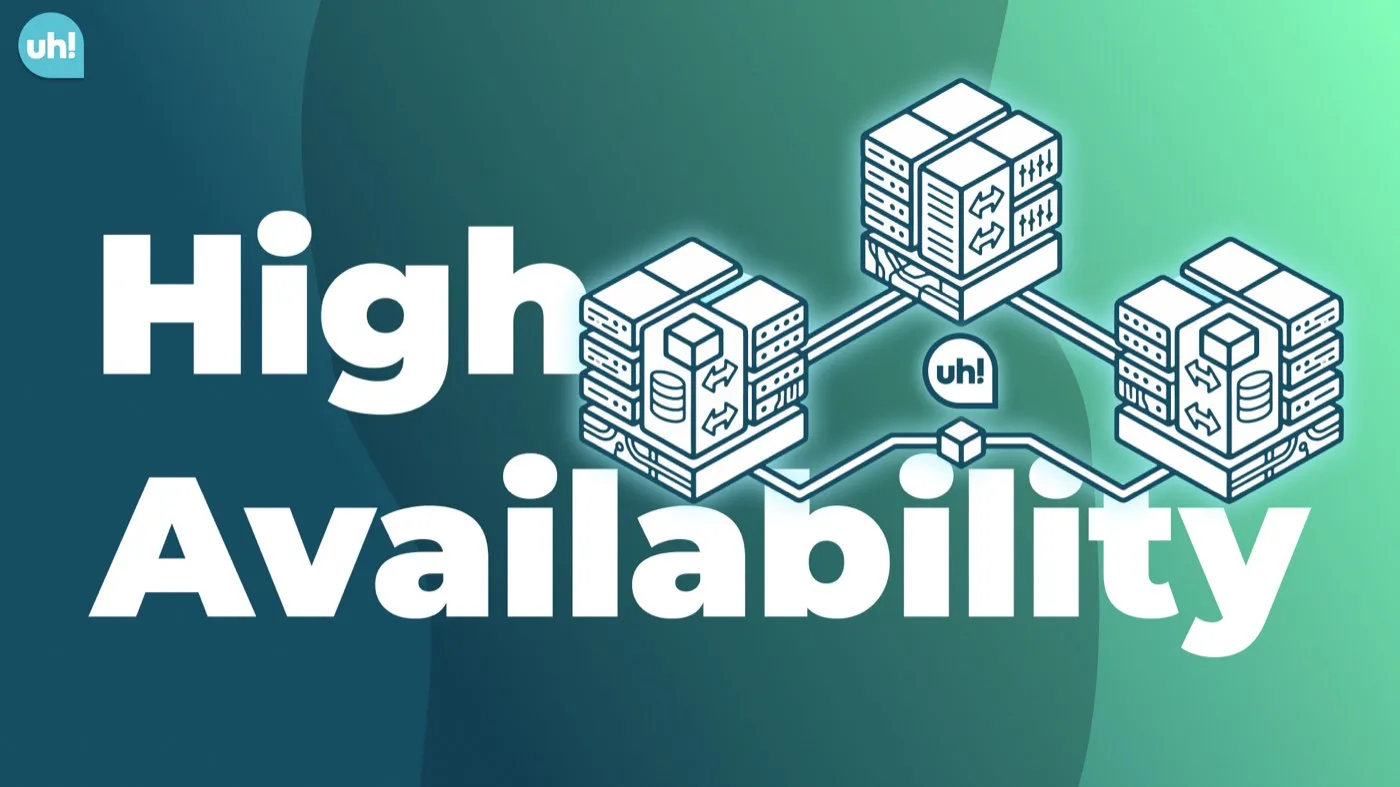
Managing physical redundancy is one of the most essential steps. Consolidating all services onto a single server or a single geographical location may seem cost-effective, but it is completely incompatible with redundancy.
Our information system is distributed across at least two distant and distinct datacenters, more than 100 km apart, while ensuring the required low latency for service continuity. We work with OVH Cloud, a trusted partner for several years, to maintain our availability level.
This setup allows us to operate in active-active mode, and even continue running from a single datacenter in case of an inter-DC link outage or network incident. OVH Cloud’s VRACK technology enables secure and private interconnection between these networks.
For services such as Elasticsearch, Redis, and RabbitMQ, deploying a third datacenter became necessary. We are progressively migrating our services to better distribute load and meet client needs.
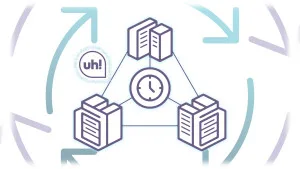
Service redundancy is inherently tied to physical redundancy, as all our services are duplicated across each datacenter.
Except for specific cases requiring high CPU, RAM, or storage capacity, our infrastructure is hosted on virtualization platforms such as VMWare and Proxmox. Automated rules enable seamless migration of virtual machines if a host fails or during software updates.
Each upstream proxy is duplicated and shares a virtual IP address (VIP). This enables us to update servers and services while limiting production downtime.
Each proxy pair is hosted on different datastores and virtualization hosts, providing both physical and software redundancy.
Tools such as keepalived are used to manage virtual IP addressing and failover.
We use multiple database management systems,MariaDB and PostgreSQL. All databases are natively replicated across each datacenter.
Rapid deployment of servers and applications is a defining characteristic of high availability. It enables fast reaction to sudden spikes in load and facilitates scalability testing.
Backups are not strictly part of redundancy, but they ensure fast and reliable recovery.
All elements required to rebuild the information system are backed up daily, with higher frequency for some components:
Testing backups is essential. We chose to test them every six months.
Electronic components and network cables may be impressive, but humans remain behind every architecture. Human-side high availability is equally important in any organization.
To ensure the right level of knowledge, we apply the following practices:
Monitoring is not directly related to redundancy, but every system must inform us of any change in state.
Redundancy is not always automatic; some situations require human intervention, especially network traffic redirection.
We also rely on:
There is no perfect solution to ensure flawless high availability, and each architecture comes with its own rules.
A wide range of tools and approaches exist to build an effective methodology. Hardware matters,but the human aspect is essential.
Cross-team collaboration, documentation, procedures, and regular testing are often what truly save an infrastructure.
Behind the tech
Here, we will discuss the monitoring tools used by uh!ive to oversee these services. Monitoring tools not only allow us to stay informed about…
July 23, 2026
Behind the techProduct
uh!ive provides a comprehensive suite of services for processing and analyzing voice (speech analytics, speech-to-text), along with a web application to access…
May 5, 2026